
Development of Lightweight Concrete with Recycled Materials
21 August 2026
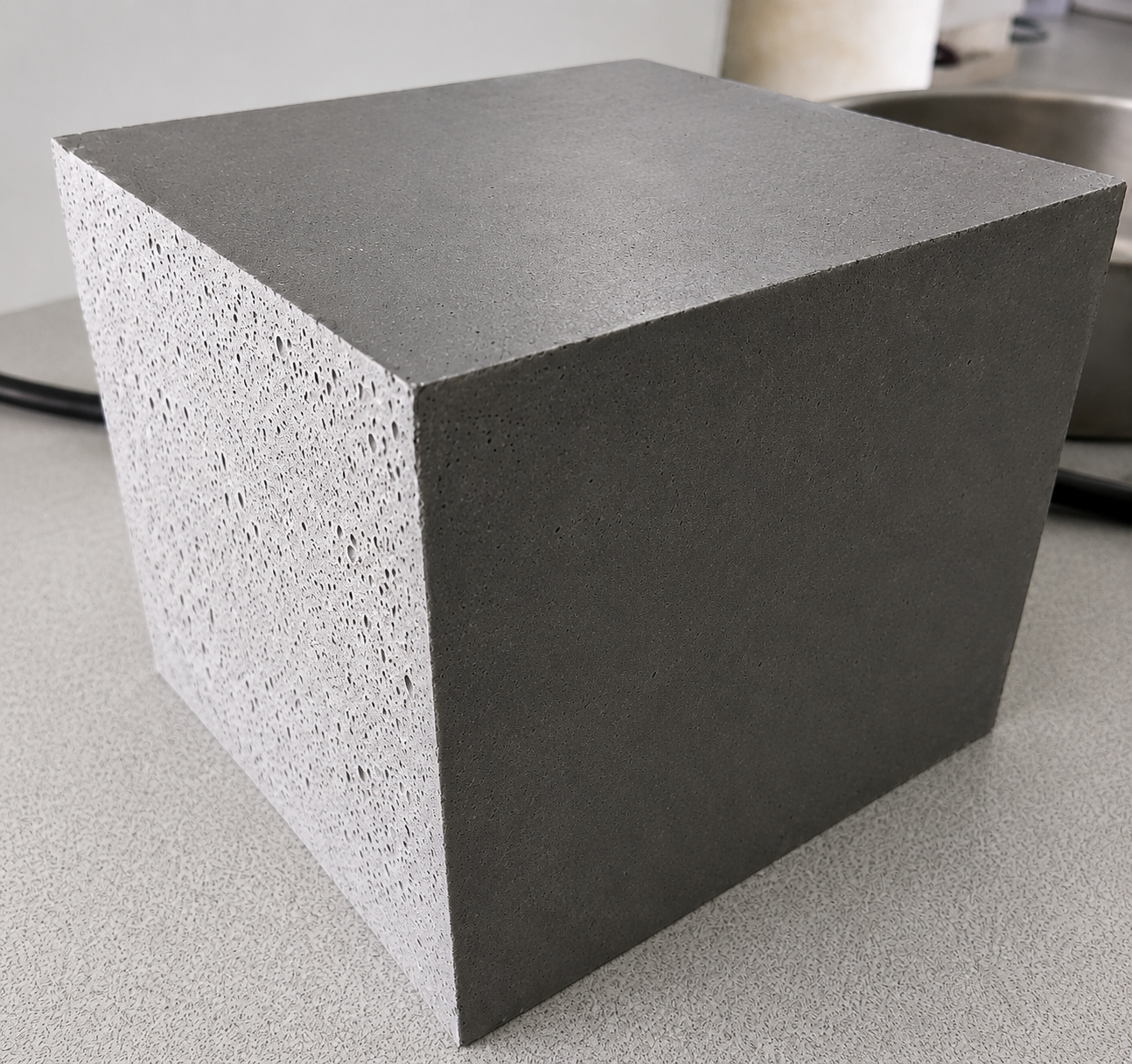
A sustainable concrete formulation that incorporates two widely available waste materials — Recycled Glass Powder (RGP) and Rice Husk Ash (RHA) — as partial replacements for sand and cement, respectively, in the production of lightweight and geopolymer concrete.
Technology overview
The construction industry faces mounting pressure to reduce its environmental footprint, particularly in the face of dwindling natural aggregate supplies and rising greenhouse gas emissions from conventional concrete production. This technology presents a sustainable concrete formulation that incorporates two widely available waste materials, Recycled Glass Powder (RGP) and Rice Husk Ash (RHA).
RGP, a by-product of industrial processes, is ground into fine powder and integrated into the concrete matrix, whilst RHA, an agricultural waste rich in silica, serves as a supplementary cementitious material to enhance strength and durability. Together, these materials enable the production of low-carbon, lightweight concrete that meets established performance benchmarks.
Technology features
Dual waste material substitution: RGP replaces conventional sand whilst RHA replaces a portion of cement in the concrete mix, creating a dual low-carbon material solution that reduces reliance on virgin raw materials without compromising structural performance.
Lightweight concrete performance: The formulation is benchmarked against ASTM C567, ensuring compliance with recognised lightweight concrete standards across a wide range of applications.
Geopolymer matrix optimisation: The technology leverages geopolymer chemistry to explore the synergistic interaction between RGP and RHA, optimising mix ratios for enhanced mechanical strength and chemical resistance.
Reduced CO₂ emissions: By partially replacing cement with RHA, the formulation contributes to a measurable reduction in CO₂ emissions, supported by basic life cycle analysis (LCA).
Potential applications
Precast concrete manufacturing
Ready-mix concrete production
Green building and infrastructure projects
Benefits
Sustainable waste valorisation: The technology repurposes two underutilised industrial and agricultural waste streams, recycled glass and rice husk ash, into functional construction materials.
Low-carbon concrete solution: Partial replacement of cement with RHA significantly lowers the carbon intensity of concrete production, positioning adopters to meet increasingly stringent environmental regulations and green building requirements.
Cost reduction potential: Substituting conventional raw materials with locally available waste-derived alternatives offers long-term cost savings in material procurement and waste disposal.
Circular economy and waste valorisation: The technology presents an opportunity for waste management and recycling companies to supply processed RGP and RHA as value-added inputs to the construction materials supply chain.
Commercialisation
The technology is available for licensing and deployment.
Partner with us today
Get in touch with us today for more information and collaboration opportunities!