
Agri-Food Innovation
Optimisation of Aquatic Feed with Underutilised Okara
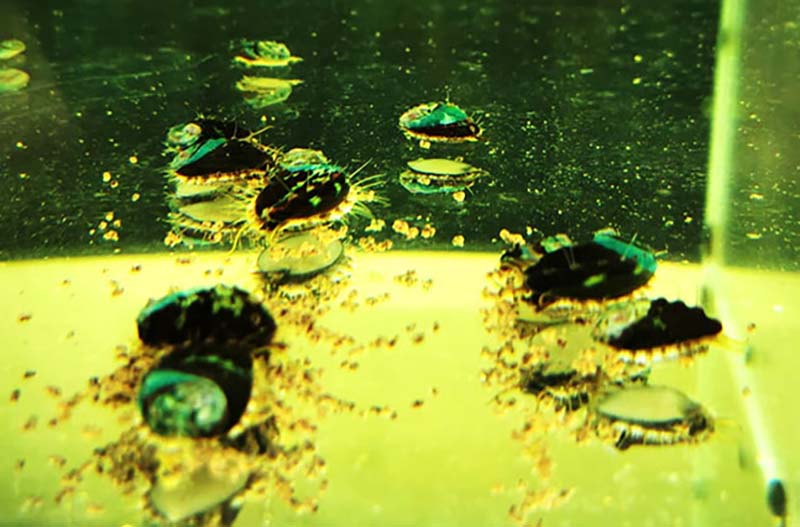
A cost-effective formulation with Okara as aquatic feed for abalone, which facilitates increased growth and survivability of abalone.
Technology overview
In Singapore, more than 30,000kg of okara are generated from soya milk and tofu production. Due to the high amount of insoluble dietary fibre and a unique, poignant smell of okara, it is often discarded as a waste product.
Despite Okara's low palatability, it is rich in nutrients. RP has developed a cost-effective formulation to include okara in the feed for abalone. The formulation can potentially be adapted and customised for other aquatic species.
Technology features
Okara contains the following beneficial nutrients:
50% insoluble fibre
20% proteins
10% unsaturated fats
Isoflavones
Vitamins and minerals
Potential applications
Okara is used as a cost-effective feed for high-value abalone, a commonly cultured species of mollusc. Okara-based feed results in the beautiful purple colouration of the shell and increased growth and survivability of abalone. In comparison, the okara-based feed costs ~30% less than commercial feed used in the industry.
There is potential for okara to be included in feed for other aquatic species such as shrimp and fish.
Benefits
An alternative nutrient source for animal feed, allowing for the sustainability of food supply and reduction of food waste.
A cost-effective plant-based functional ingredient, lowering the costs of feed for aquaculture farms.
Nutritional composition can be tailored for different species.
Increased growth rates and survivability.
Commercialisation
This technology is available for licensing and technology transfer.
Partner with us today
Get in touch with us today for more information and collaboration opportunities!