
Others
Self-Cleaning Additive for Paints and Coatings
A method for preparing an additive with self-cleaning properties capable of removing organic airborne pollutants.
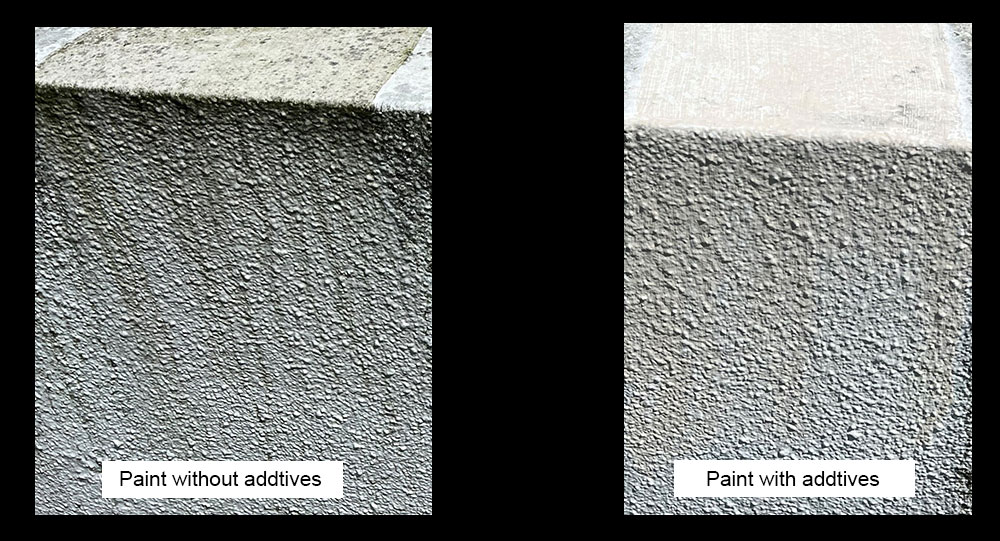
Technology overview
Self-cleaning paints can reduce the need for frequent cleaning and recoating, saving labour costs, especially for larger infrastructure where maintenance work is time-consuming and expensive. RP has developed an ultrasonic-assisted, wet chemical method to prepare doped titanium dioxide (TiO2) material as an additive for paints and coatings. This additive provides the photocatalytic / photo-induced self-cleaning effect on the coating surface, enabling long-lasting surface cleanliness and, thus, requiring less maintenance. It can also aid in the removal of organic airborne pollutants such as sulphur dioxide (SO2) and nitrogen through photo-degradation reactions.
Technology features
Unlike conventional TiO2-based additives, which can only be activated by the specific band gap of UV light (e.g., 3.2 eV, 387 nm), the proposed doped TiO2 additive extends its active spectrum of photocatalytic activity into the visible light range. This extension greatly improves the self-cleaning effects and surface de-pollution efficiencies.
Compatible with water-based paints and coatings
Degrades particulate and organic airborne pollutants to clean building surfaces
Potential applications
Exterior and interior of buildings
Glass panels and various surfaces for their self-cleaning effect
Benefits
Can be used on existing and new buildings
Reduce the frequency of maintenance and the need to recoat surfaces
Paints and coatings incorporated with this self-cleaning additive can be easily applied on the surfaces by painting or spraying application methods
Commercialisation
The technology is available for licensing and deployment.
Partner with us today
Get in touch with us today for more information and collaboration opportunities!