
Applied Science
Work-Study Post-Diploma (Specialist Diploma in Food Manufacturing Services)
Open for Registration
Open for Registration
Course Type
SkillsFuture Work-Study Programmes
Specialist Diplomas
Applied Science
Agrifood Innovation
This Work-Study Programme (WSP) will provide opportunities for fresh polytechnic graduates to deepen their skills and knowledge needed for a career in the fast-evolving food manufacturing and service industries. regarding this article.
This course is open for registration. Apply here.
About Course
Course Overview
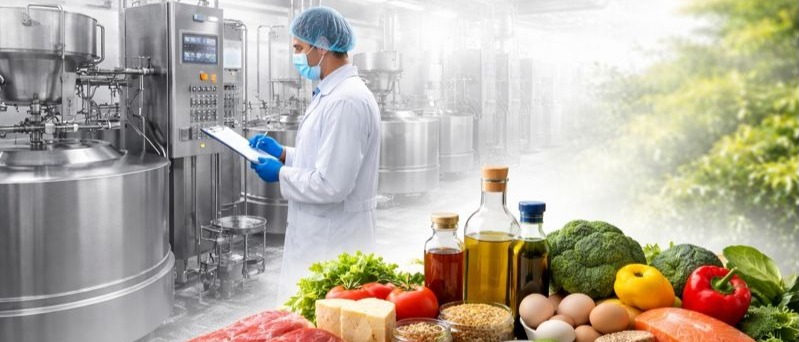
This Work-Study Programme (WSP) will provide opportunities for fresh polytechnic graduates to deepen their skills and knowledge needed for a career in the fast-evolving food manufacturing and service industries. Suitable candidates will be matched with a relevant job offered by a WSP partner company, in opportunities such as:
Food Production/ Process Technologist
Quality Control (QC) Laboratory Analyst
Quality Assurance (QA) Specialist / Food Safety Officer
Food Technologist / Food Product Development Executive
Food Packaging Technologist
Food Innovation / Research Executive
R&D Chef , Central Kitchen Executive/ Manager
The Work-Study Post-Diploma aims to provide a pathway for career development and further education through two (2) Post-Diploma Certificates (PDCs). Upon successful completion of the programme, participants will be awarded a Specialist Diploma in Food Manufacturing and Services. Participants who complete the WSP will also receive $5,000 incentive.
Through practical, industry-focused learning, you will:
Build strong technical foundations in automation and applied artificial intelligence (AI) technologies, sustainable packaging, biotechnology applications, food safety, product development and future foods.
Gain hands-on experience through applied projects and real-world case studies in foodtech, manufacturing, and service operations.
Choose from specialised pathways that enable you to develop deeper competencies in food innovation and safety, sustainability, or artificial intelligence and digital transformation.
Strengthen your employability through exposure to advanced food production technologies, regulatory requirements, and industry best practices aligned with national initiatives.
Course Objectives
Upon completion of the diploma, students will be able to:
Apply automation, digital platforms, applied AI, and data-driven tools to streamline food manufacturing and service operations, boost productivity, and enhance business decision-making.
Develop, test, and launch innovative food products and services that align with evolving consumer trends, nutritional needs, and emerging food technologies.
Integrate scientific principles, advanced technologies, and robust food safety and quality systems to ensure operational efficiency, regulatory compliance, and consumer trust.
Implement sustainable practices across food production, packaging, supply chain, and waste management, supporting environmental goals and corporate sustainability commitments.
Lead initiatives in decarbonisation, circular economy, and ESG reporting to strengthen sustainability performance in the food manufacturing and services sectors.
Target Audiences
This programme is suitable for:
Fresh diploma graduates from food science, nutrition, chemical engineering, applied science, hospitality, or related domains who wish to enter the food manufacturing or services sectors.
Mode of Assessment
Industry project work and graded assignments
Course Structure
You will be awarded the Specialist Diploma in Food Manufacturing and Services upon successful completion of two Post-Diploma Certificates (PDCs).
The first PDC in Sustainable FoodTech and Services will be a core certificate that all learners (WSP and non-WSP) have to complete. Learners from both WSP and non-WSP will then have a choice of domain specialisation for their second PDC to select to embark on, as follows:
Food Innovation and Safety
Sustainability
Artificial Intelligence and Digital Transformation
The Specialist Diploma in Food Manufacturing and Services will be issued upon meeting 50% of attendance requirement and passing all coursework and assessment.
Post Diploma Certificate 1 – Sustainable Foodtech and Services
This PDC equips learners with essential technical and industry-relevant competencies through three integrated modules: Automation for Food Services and Manufacturing, Sustainable Packaging and Green Supply Chain, and Biotechnology in Food Production. These modules build a strong foundation in leveraging automation to enhance operational efficiency, applying sustainable solutions to meet environmental and regulatory goals, and utilising biotechnology to drive innovation and productivity. This PDC prepares learners to contribute effectively to Singapore’s future-ready, resilient, and sustainable food manufacturing and services sectors.
Post Diploma Certificate in Sustainable Foodtech and Services
Module Name | Module Synopsis |
Biotechnology in Food Production | This module delves into the applications of biotechnology in the development of innovative food products. Participants will explore the science behind genetically modified organisms, precision fermentation, and enzyme technologies. Ethical, regulatory, and safety considerations surrounding biotechnology in the food industry will also be covered. The module also introduces the use of innovative food ingredients, including lab-grown meat, plant-based alternatives, insect food and functional foods, along with cutting-edge processes used in their production. These topics will highlight the potential of novel foods to address global food security and sustainability challenges. Through hands-on case studies, learners will develop the skills needed to critically evaluate and contribute to advancements in food biotechnology and the creation of future-forward food solutions. |
Sustainable Packaging and Green Supply Chain | This module provides participants with the knowledge of sustainable practices for the food industry. Learners will explore eco-friendly packaging materials, life cycle assessment, and strategies to reduce the environmental impact of packaging. Learners will be exposed to how the packaging industries drive innovations through circularity, recycling technologies for paper, plastics, glass and metal containers. Other aspects such as green supply chain practices, including carbon footprint reduction, waste management, and ethical sourcing will be covered. Participants will learn how to implement sustainable practices that drive long-term environmental and business benefits, while meeting consumer expectations and regulatory standards. |
Automation for Food Services and Manufacturing Project | This module provides an in-depth understanding of automation technologies transforming the food manufacturing and services sectors. Learners will explore the applications of robotics, automated control systems, sensors, and generative AI solutions to boost operational efficiency, enhance safety, and ensure product consistency in food production and service delivery. With a focus on Industry 5.0 advancements, the module presents real-world case studies illustrating how automation optimises workflows, improves product and service quality, and minimises resource wastage. Through a project-based approach, learners will apply automation concepts to design or evaluate automation solutions tailored to food industry scenarios. By the end of the module, learners will be equipped with the practical skills and strategic mindset to implement automation strategies and drive innovation within Singapore’s food manufacturing and services landscape. |
Post Diploma Certificate 2 – Food Innovation and Safety Pathway
The Post Diploma Certificate in Food Innovation and Safety equips learners with specialised competencies in food safety management, innovative product development, and emerging food technologies. Learners will gain practical knowledge of food safety systems and regulatory requirements in Singapore, alongside skills to develop novel and market-relevant food products using advanced processing techniques and sustainable ingredients, such as alternative proteins and functional foods. Through industry-applied projects guided by mentors, learners will integrate scientific, technological, and market considerations to create future-forward food solutions, preparing them for technical, quality assurance, and research roles in Singapore’s food manufacturing and services sectors and addressing global trends towards sustainable and healthier food systems.
Post Diploma Certificate 2 – Food Innovation and Safety Pathway
Module Name | Module Synopsis |
Food Safety and Quality Management | This module offers a comprehensive overview of the principles and practices essential for ensuring that food products meet the highest safety and quality standards. Learners will explore key topics such as hazard analysis, critical control points (HACCP), and good manufacturing practices (GMP), alongside modern quality assurance systems utilised within the food industry. Through a blend of theoretical instruction and practical application, the module emphasises the importance of monitoring, testing, and continuous improvement in food production processes. By the end of the module, learners will be equipped with the knowledge to implement effective safety protocols and quality control measures, ensuring compliance with regulatory standards and fostering consumer confidence in food products. |
Future Foods | This module explores trends and technologies revolutionising the food industry, focusing on new ingredients like insect-based foods and alternative proteins. Learners will examine sustainable production, advanced processing techniques, and ethical considerations, integrating market research with scientific insights to predict dietary trends and tackle environmental challenges. The course covers the nutritional and environmental benefits of future foods, processing innovations, and consumer acceptance, preparing learners to understand regulatory frameworks and drive innovation in the food sector. |
Food Product Development and Innovation Project | This module provides a comprehensive insight into the creative and technical processes behind developing innovative food products, with a strong emphasis on project-based, hands-on applications. Learners will engage in practical projects covering all stages of product development, from ideation and formulation to prototype testing and sensory evaluation, integrating consumer insights to ensure market relevance. The curriculum will explore novel ingredients, functional foods, and advanced processing techniques to enhance product quality, nutrition, and appeal. Through these projects, learners will also navigate regulatory and labelling requirements for food product commercialisation. By the end of the module, learners will be equipped with the practical skills, industry knowledge, and innovative mindset needed to develop and launch successful food products, fostering a culture of continuous product innovation and market responsiveness within the food manufacturing and services sectors. |
Post Diploma Certificate 2 – Sustainability Pathway
The Post Diploma Certificate in Sustainability provides a comprehensive and practical understanding of how to drive organizational sustainability, with a strong emphasis on decarbonisation and reporting. Learners will gain the technical skills necessary to measure and manage greenhouse gas emissions, implement circular economy principles, and develop effective sustainability strategies. The program delves into the intricacies of climate and sustainability reporting, equipping participants to navigate international standards like ISSB and GRI, and to ensure alignment with regulatory requirements. Through a project-based approach, learners will develop and implement low-carbon transition plans, focusing on energy and resource efficiency, and learn how to integrate sustainability into core business operations and reporting.
Post Diploma Certificate 2 – Sustainability Pathway
Module Name | Module Synopsis |
Decarbonisation, Circular Economy and Resource Management | The Decarbonisation, Circular Economy and Resource Management module will equip learners with the techniques to measure both direct and indirect carbon emission, which covers scopes 1, 2 and 3, to determine an organisation’s greenhouse gas footprint for setting decarbonisation targets and reporting. Learners will be guided to implement resource management plans including circular waste management and energy efficiency solutions to achieve carbon neutral or net-zero goals. |
Climate and Sustainability Reporting | The Climate and Sustainability module covers the foundational understanding of sustainability reporting standards and frameworks in Singapore, with an in-depth focus on the International Sustainability Standards Board (ISSB), which builds on the Task Force on Climate-Related Financial Disclosure (TCFD) and Global Reporting Initiative (GRI) Standards. Learners will explore climate risks and opportunities to ensure a strong connection between sustainability and financial performance. With the acquired knowledge, learners will be equipped to lead the development of their organisation’s sustainability reporting, and accounting policies and processes in line with regulatory requirements and international best practices. |
Low-Carbon Transformation Capstone Project | In the low-carbon transformation capstone project module, learners will be guided through a project-based approach in planning, developing and implementing a sustainability strategy for an organisation’s low-carbon transition. Best practices in sustainability and net-zero transformation will also be discussed. Learners will apply low-carbon strategies such as tracking energy and resource consumption to identify opportunities for improving energy and resource efficiency. |
Post Diploma Certificate 2 – Artificial Intelligence and Digital Transformation Pathway
This course equips professionals with practical skills to apply artificial intelligence and automation for improved efficiency, innovation, and data-driven decision making. Through hands-on learning, participants will explore how to streamline business processes, uncover actionable insights, and implement AI-driven solutions to support digital transformation across various industries.
Post Diploma Certificate 2 – Artificial Intelligence and Digital Transformation Pathway
Module Name | Module Synopsis |
Generative AI for Business Analytics | This module equips learners from different fields and background with skills in data handling and analysis using Power Query, Excel, and Power BI, focusing on automating data transformations and creating dynamic dashboards. It enhances data interpretation by integrating Generative AI to analyse diverse data sources more effectively and visualize insights. This training not only boosts technical proficiency but also sharpens analytical thinking, enabling strategic contributions through data-driven decisions in various business contexts. |
Generative AI for Business Productivity | This module equips learners with practical skills to leverage Generative AI for enhancing business productivity and innovation. Learners will explore foundational AI concepts, master prompt engineering techniques, and develop code-free applications using Large Language Models (LLMs). The course emphasizes hands-on learning, enabling learners to create AI-driven solutions that automate tasks, improve decision-making, and transform workflows. By the end of the program, learners will have the tools to integrate AI effectively into business processes, driving efficiency and success. |
Enhancing Business Processes with Automation | Business workflow automation is a critical tool for improving efficiency and productivity in day-to-day operations. By automating repetitive business processes, organizations can achieve higher accuracy and significant productivity gains. This module introduces learners to various automation tools and techniques that streamline data collection, enhance process management, and optimize workflow automation. During the training, learners will set up forms, collect data, and connect workflows using a range of digital automation solutions. Learners will also undertake a project to develop automation solutions that address real-world business challenges and reinforce their understanding of automation in action. |
Entry Requirements
WS Eligibility
Singaporeans and Singapore Permanent Residents who are:
within three years of graduation from the Polytechnics or the Operational Ready Date (ORD) for full-time National Servicemen, or
within five years of graduation from the Polytechnics, and if their employer is a participating company.
Course Entry Requirement
Applicants should preferably possess a relevant local polytechnic Diploma in one of the following disciplines:
Applied Sciences
Built Environment
Business & Management
Engineering
Information and Digital Technology
Admission will be reviewed and approved by the polytechnic on a case-by-case basis.
Conditional Offer
Graduating students (in their final semester) from a local polytechnic or Institute of Technical Education (ITE) may apply for the programme.
Click here for more information on how to apply for the programme and receive a Conditional Offer.
Interested applicants may submit their interest via https://for.edu.sg/rp-wsp to be contacted for a job matching opportunity before applying for the course.
Course Schedule
Course schedule information
Course Schedule
Commencement Date | Duration | Mode and Venue | Schedule | Application Start and End Date |
April | 1 year | Online Learning & Face-to-face lessons at Republic Polytechnic | Weekdays 6 pm or 6.30 pm - 10.00 pm | Please refer to the registration period below. |
Note: RP reserves the right to reschedule/cancel any programme and amend information without prior notice.
Refer to the Academic Calendar on the Republic Polytechnic website or key dates and important information to help you plan your learning journey.
How to Apply?
Click the Apply button to submit your application. You will receive a confirmation once it has been successfully submitted.
If you are unable to attend the current course dates, click Register Interest button to be notified of future intakes.
If the Apply button is not visible, it means applications are currently closed. You can still click Register Interest button to leave your details, and we’ll notify you when the next application window opens.
Company Sponsorship
If your company is sponsoring your course:
Ask your company’s course coordinator to log in to the STEP portal with Corp Pass and create a corporate application link for you.
Use this link to submit your application.
Need help? Check out our step-by-step guide for instructions on using the STEP portal.
Need More Information?
Visit the Course Application page for full details on the application process.