
Industry
RP innovation turns soybean waste into sustainable protein solutions
Industry
Industry Success Stories
1 November 2025
RP School of Applied Science (SAS) has licensed its okara solubilisation technology to a startup, transforming discarded soybean pulp into high-quality proteins and bioactive peptides for food, nutraceutical and cosmeceutical applications.
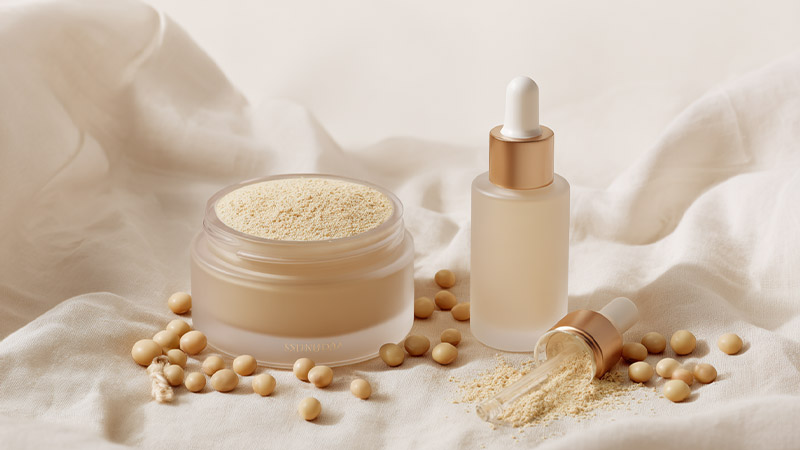
Every year, large quantities of okara, the soybean pulp generated during soy milk and tofu production, are discarded or used as low-value animal feed despite containing up to 30% protein residue. This underutilisation represents a significant loss of potential nutritional and commercial value.
The SAS has licensed its technology to a startup to advance sustainable protein innovation through the study of Okara Peptide. Leveraging RP's innovative okara solubilisation technology, the project focuses on extracting and purifying high-quality proteins and bioactive peptides with antioxidant and anti-inflammatory properties for food, nutraceutical and cosmeceutical applications.
The innovation lies in its circular economy approach, upcycling high-volume food waste into useful biomaterials, combined with advanced bioprocessing methods that maximise protein recovery efficiency. This not only supports Singapore's zero-waste and food security goals but also promotes new research capabilities and student learning opportunities within RP.
Through test-bedding and industrial scaling supported by an industry partner, this partnership exemplifies how science-driven innovation and industry collaboration can create sustainable solutions that bridge environmental responsibility with commercial potential.