
Industry
Upcycling agricultural residues into scalable, industry-ready sustainable materials
Industry
Industry Success Stories
11 March 2026
RP School of Applied Science and industry partners have developed a proprietary, chemical-free process to upcycle agricultural by-products into high-performance, biodegradable bio-composites. By eliminating synthetic resins and VOCs, this scalable innovation supports Singapore’s Green Plan 2030 and the global shift toward a circular economy through sustainable packaging and material alternatives.
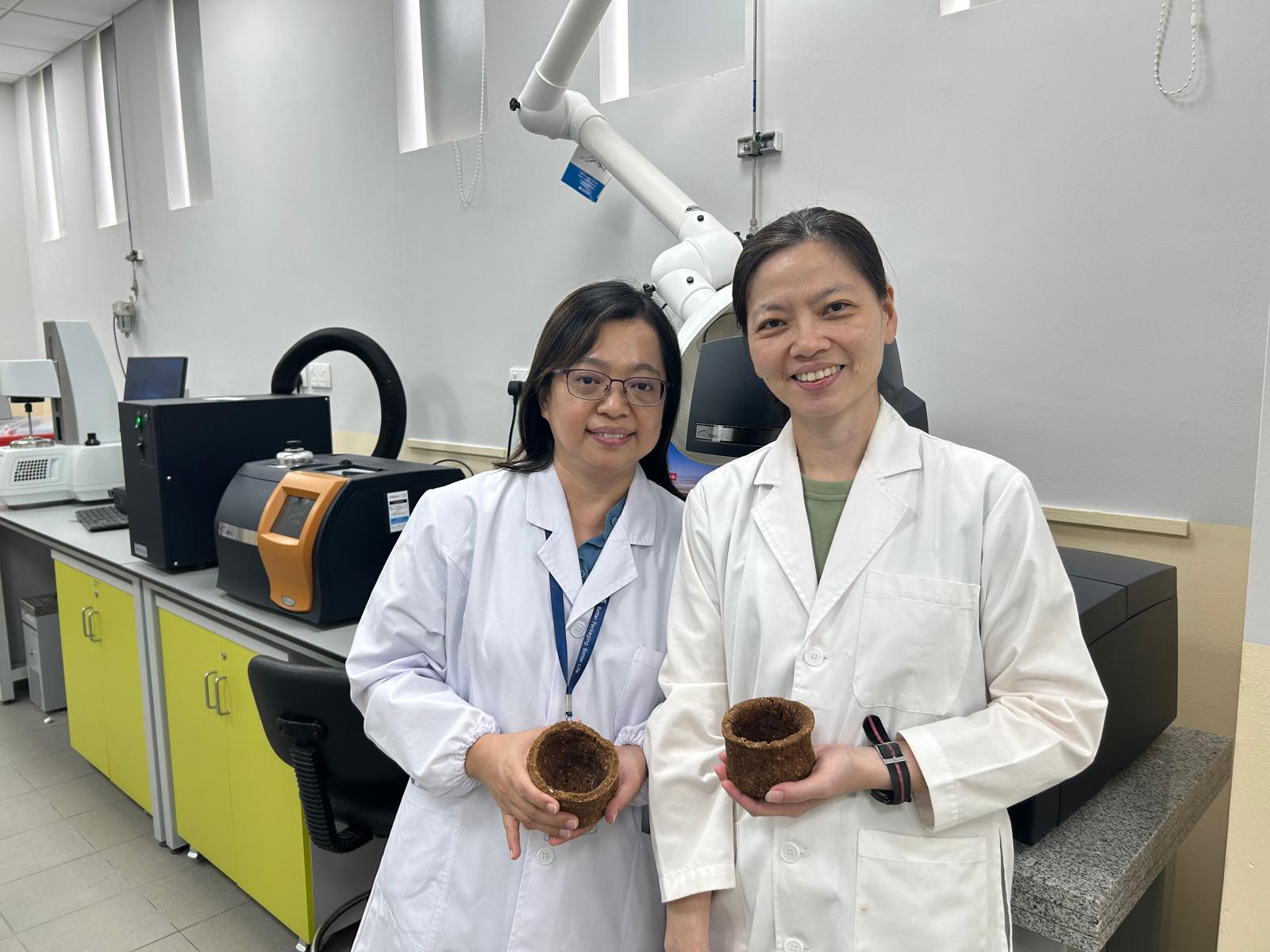
In response to the growing global demand for sustainable materials, RP School of Applied Science, partnered with industry collaborators to transform underutilised agricultural by-products into high-performance, biodegradable bio-composite materials.
The project was successfully licensed to RP start up. A proprietary, chemical-free conversion process was developed, harnessing the natural binding properties of cellulose, hemicellulose, pectin, and lignin found in agricultural residues. By eliminating synthetic resins and harmful volatile organic compounds (VOCs), the innovation significantly reduces environmental impact while streamlining manufacturing processes.
This breakthrough enables agricultural waste such as rice and fruit side streams to be upcycled into sustainable materials, packaging solutions, and composite alternatives. Supporting Singapore’s Green Plan 2030, the collaboration demonstrates how applied materials science and industry partnership can advance circular economy principles, reduce carbon emissions, and create scalable, commercially viable sustainable solutions.