
School of Applied Science
Diploma in Biomedical Science (R14)
Interest Area
Applied Science
PFP Cluster
Sciences
Transform your fascination with how the human body responds to disease into a rewarding career in biomedical science and healthcare.
What you will learn
Gain a comprehensive understanding of the human anatomy, and the molecular and physiological mechanisms underlying various diseases. Explore the fundamentals of bioinformatics and its use to investigate genes, proteins, and complex biological systems. Acquire investigative and technical skills to perform scientific research and laboratory diagnostics, preparing you for a rewarding career in the biomedical science and the healthcare industry.
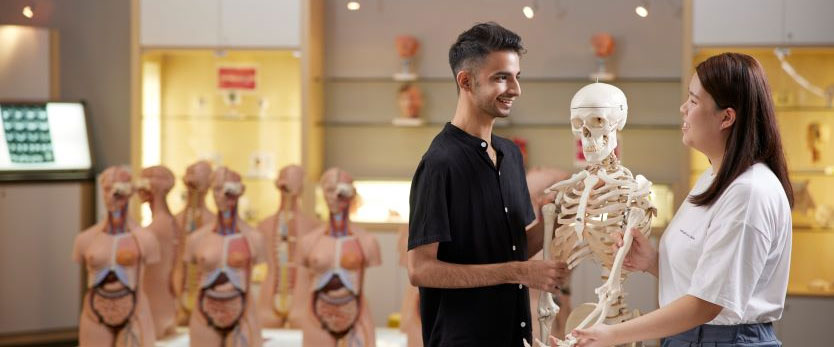
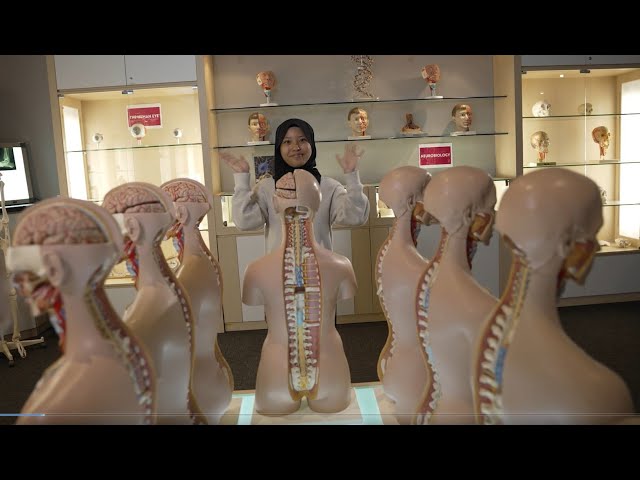
Learn anatomy in a truly interactive way at our dedicated Anatomy Learning Centre, packed with anatomical models and real specimens. You’ll also be supported by innovative EdTech that makes complex science easier to understand
Develop mastery in laboratory techniques through hands-on training offered in both two Majors – Biomedical Research and Medical Laboratory Technology
Learn about the integration of biology with data science in the Bioinformatics module, and how it drives healthcare innovation
Curriculum Structure
General Modules
Discipline Modules
Major Modules
Choose one of the Majors below:
Major in Biomedical Research
Major In Medical Laboratory Technology
Elective Modules
Customise your learning pathways by selecting ONE of the following options:
Option A: Select Elective modules totalling 12 Modular Credits (MCs) from the list of modules in the Minor programmes that are applicable to the Diploma and/or from the List of Electives below
Option B: Select a Minor Programme
Option C: Select a CET-based Certificate programme and/or Elective module(s) from the list of modules in the Minor programmes that are applicable to the Diploma or from the List of Electives below (only for eligible students)
List of Electives for Major in Biomedical Research:
List of Electives for Major in Medical Laboratory Technology:
Learn how you can customise your learning pathways.
Industry Orientation Programme
Option 1: One-Semester Industry Immersion Programme
And select one module from the list below:
Option 2: Two-Semester Industry Immersion Programme
Entry Requirements
GCE O-Levels
Aggregate Type: ELR2B2-C
View aggregate computation [PDF, 240 KB]
Range of Net ELR2B2 for 2026 JAE: 8 to 10
Minimum Entry Requirements/Grade:
English Language: D7
Mathematics (Elementary/Additional): C6
Any one of the following subjects: C6
Biology
Biotechnology
Chemistry
Food & Nutrition / Nutrition & Food Science
Physics
Science (Chemistry, Biology)
Science (Physics, Biology)
Science (Physics, Chemistry)
Nitec/Higher Nitec
GCE A-Levels
Minimum Entry Requirements:
Obtain an A-S grade for General Paper (English Medium) or Knowledge & Inquiry, AND
Obtain an A-E grade for H2 Mathematics, AND
Obtain an A-E grade for H2 Chemistry, AND
Obtain an A-E grade for H2 Biology
View the full list of module exemptions for RP courses.
If you do not meet the GCE A-Level Minimum Entry Requirements, you may apply for admission using your GCE O-Level results.
Note: Admission to RP is based on academic merit and subject to available vacancies in our diploma programmes. Meeting the minimum entry requirements does not guarantee that applicants will be offered a placement in the diploma programme. These requirements are set in place to ensure fairness to all applicants.
Further studies
RP alumni will be prepared to embark on meaningful careers immediately after graduation. Enhance your employability by taking part-time courses or SkillsFuture Work-Study Programmes.
Moreover, every RP diploma is recognised and has a pathway leading to a relevant degree at top local and overseas universities. You may complete your degrees in just over two or three years in a four-year programme.
Skills Deepening
After graduating from RP, you can choose to deepen your skills and knowledge in a chosen field before embarking on your career. You could either sign up for part-time courses or pursue work-study programmes. Visit our Lifelong Learning page to find out more.
Undergraduate Studies
Holding a DBMS allows you to pursue degree programmes in a wide range of subjects in various biomedical and applied science fields, including bioengineering, biological science, chemistry, medicine, medical laboratory technology, and allied health in top universities such as (not limited to):
You may also be eligible for exemptions and advanced standing of up to two years at top overseas universities. Some of these universities include:
Australia
United Kingdom
New Zealand
Career Opportunities
You can pursue a fulfilling career in healthcare institutions, research laboratories and companies that develop and distribute biomedical products. Look forward to roles such as:
Laboratory Technologist
Medical and Laboratory Product Specialist
Medical Technologist
Quality Control / Quality Assurance Officer
Research Assistant
Hear from our student
“RP has reshaped how I view learning and what I’m capable of achieving. I’ve seized opportunities I never imagined and unlocked milestones I once thought were out of reach. It gave me a safe space to discover my potential, grow through setbacks and build confidence. RP has helped me realise #GreaterPossibilities, equipping me for a brighter future.”— Zafirah Iskandar Dzulkarnain, 2025 Graduate

RP Course Guide
Get all the course info you need! The RP Course Guide is your complete resource for programme details, entry requirements, student life insights and more.